







Search Results for: four servings
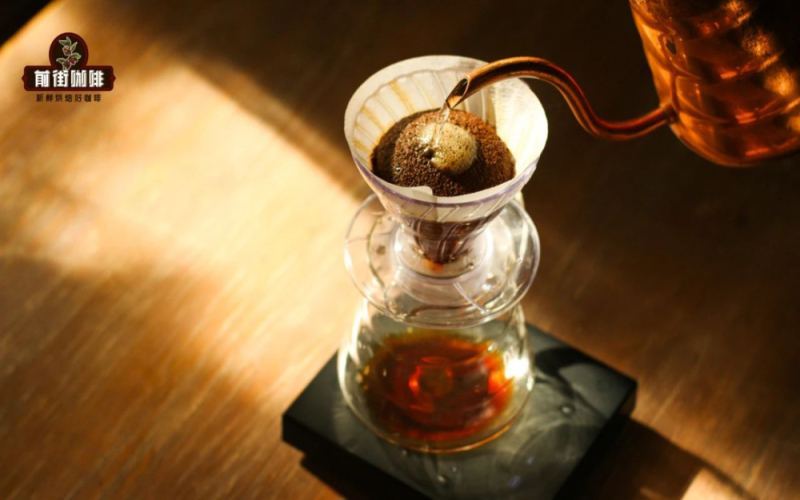
Analysis of Hand-Brewing Techniques for a Large 30g Coffee Dose: How to Avoid Bitterness and Uneven Extraction When Brewing for Four
Many coffee enthusiasts, once accustomed to the rhythm of brewing a single serving of pour-over, often find that flavors turn out vastly different from their daily results when they attempt to brew a large batch of four servings at once. The increase in coffee dose brings not only a change in water volume, but also systematic adjustments involving dripper capacity, pouring technique, grind size, and even extraction time. Front Street Coffee frequently receives similar questions: how should 30 grams of coffee be brewed to taste good? This article will provide a complete overview of the practical key points for large-dose pour-over, from dripper matching, grind size setting, and blooming strategy to the logic of staged pouring, helping you consistently present a clean and well-layered coffee flavor even when sharing among multiple people. [more…]
How to Hand-Brew 15g, 20g, and 30g Coffee Grounds? A Guide to Coffee-to-Water Ratios and Filter-Cup Adjustments for Four Servings
The choice of coffee dose for pour-over seems simple, but in reality it involves multiple coordination factors: the dripper model, the number of drinkers, and the pouring rhythm. Front Street Coffee's daily demonstration uses 15g of coffee as the baseline, but in actual brewing, doses that are multiples of 6 such as 12g, 18g, and 24g, doses that are multiples of 5 such as 15g, 20g, and 25g, and even 16g each have their own adherents. Behind different doses lie different reasoning logics—some start from the volume of brewed coffee, some compromise based on the dripper's recommended value, and others aim for easier calculations during pulse pouring. This article will focus on three typical doses—15g, 20g, and 30g—explaining the brewing approaches suited to each, and providing adjustment suggestions for dose, water amount, and dripper selection in a four-person pour-over scenario, helping you achieve consistent results even when sharing with multiple people. [more…]
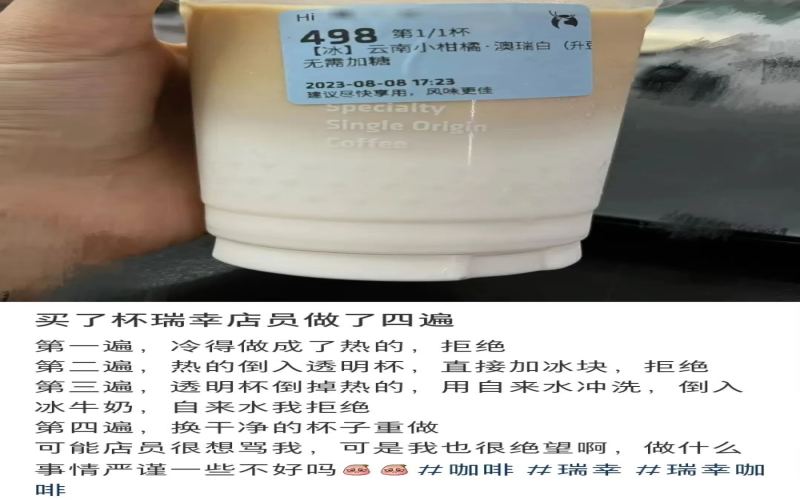
Luckin employee took four attempts to serve the order, customer complaints about non-standard operation spark heated discussion
Recently, a netizen shared on social media their experience ordering at Luckin: a single cup of coffee was repeatedly remade by the staff four times before they finally got it. From getting the hot/iced order wrong, to rinsing the cup with tap water, to being stopped by a colleague when about to add ice and milk, the whole process left many onlookers exclaiming how absurd it was. The incident also sparked heated discussion about Luckin's employee training, operating standards, and food safety. What exactly happened? Was the customer's complaint reasonable? And what problems did the store's operations expose? Let's take a look. [more…]

Analysis of the Optimal Serving Temperature for Hot Americano: A Comparative Experiment Between Dark and Light Roast Beans
In the cold winter, the order rate for hot Americanos rises noticeably, yet the serving temperature at different cafés varies widely, ranging from 60°C to over 90°C. Exactly which temperature range allows a hot Americano to reach its best flavor and mouthfeel? Front Street used a dark-roast espresso blend and a medium-light-roast single-origin bean respectively, comparing them one by one at four temperatures: 60°C, 70°C, 80°C, and 90°C, conducting tests across dimensions such as aroma retention, initial drinking experience, changes as it cools, and the length of the enjoyable drinking window. The results showed that the optimal temperature for dark-roast and light-roast beans is not the same, but both are not very friendly to high temperatures above 80°C. This article will present the full experimental process and conclusions to help coffee lovers find the most ideal state for a cup of hot Americano in winter. [more…]
Espresso Full Analysis: Tasting Methods and Food Pairing Suggestions for Four Classic Kung Fu Coffees
Espresso's status in the coffee world is like the weight of gongfu tea in tea culture—it is both the foundation and the test. A good espresso is covered with a thick layer of dark brown crema, with fine mottled patterns interwoven through it, and it is already moving enough without any embellishment. It is both the soul base of cappuccino and latte, and it can also appear on its own without any dressing. However, from Single espresso to Double espresso, from Macchiato to Con panna, each kind of gongfu coffee has its own character and way of drinking. This article will break down one by one the tasting essentials and pairing suggestions for these four classic espressos, helping coffee lovers no longer feel lost when ordering in a café and also replicate as much as possible that essence extracted within 30 seconds at home. [more…]
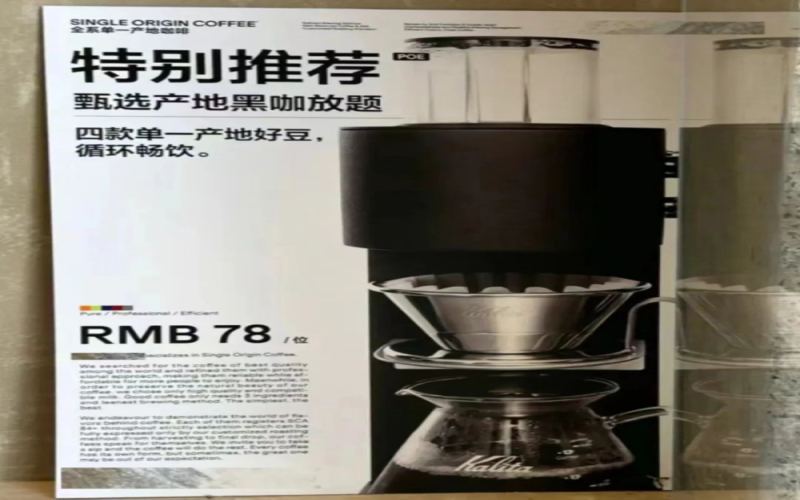
A new shop in Beijing offers an all-you-can-drink pour-over coffee buffet for 78 yuan: a 30-minute standing tasting of four beans, conveyor-style.
Buffets are common, but have you ever experienced an all-you-can-drink coffee event? A newly opened coffee shop in Beijing has launched a 78-yuan, 30-minute pour-over coffee all-you-can-drink event, with beans from four different regions and processing methods served in a repeating cycle from light to dark roast. Customers stand at the bar to taste, forming a unique "human wall" scene. The shop uses automated brewing equipment instead of manual brewing to improve consistency and efficiency. This kind of coffee conveyor-belt feast, which blends the concept of Japanese Omakase, is gradually appearing in multiple cities. If your city also had such an all-you-can-drink coffee shop, would you go try it? [more…]
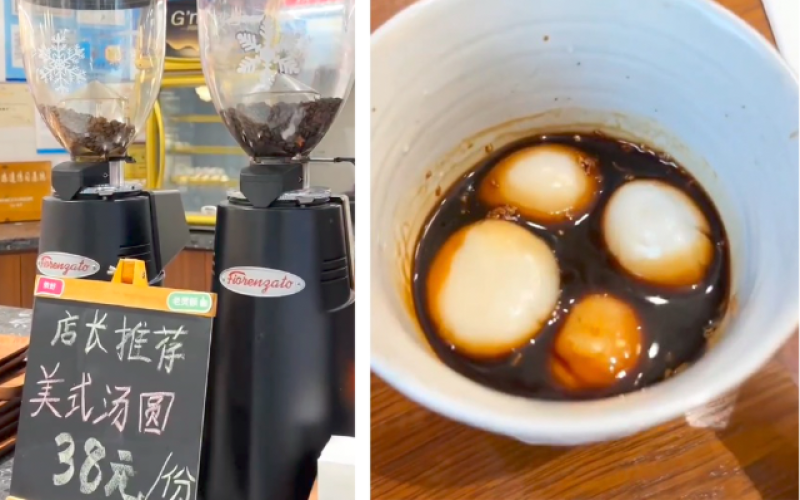
Four American-style tangyuan for 38 yuan sparks debate: After KFC's limited affogato, the value for money of new coffee shop Lantern Festival offerings is questioned.
On the eve of the Lantern Festival, KFC launched a limited-edition "Tangyuan Affogato Romance"—affogato paired with black sesame tangyuan—sparking a check-in craze, but designated stores and limited supply left many netizens empty-handed. Later, a café in Shanghai also rolled out Americano tangyuan: four freshly boiled black sesame tangyuan served in a ceramic cup, topped with a shot of espresso. However, the 38-yuan price tag and the taste of "super bitter coffee with super sweet tangyuan" drew complaints from netizens about poor value for money, and since it's simple to make, it can be replicated at home with household coffee equipment. This article will walk you through the ins and outs of this festive special and include Front Street Coffee's recommendations for making it at home. [more…]
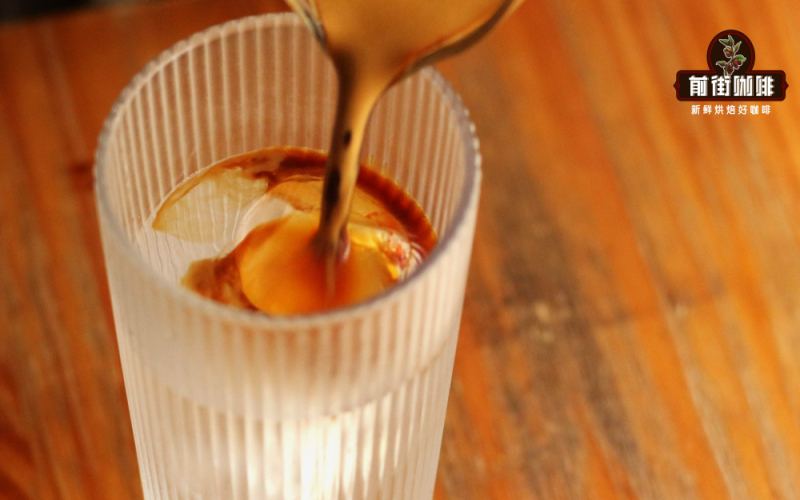
What Is the Ideal Temperature for Hot Americano? A Full Analysis of Flavor Differences at Various Temperatures and the Best Time to Drink It
Coffee enthusiasts have different preferences for drinking temperature, from piping hot to ice-cold, but the actual impact of temperature on flavor is often overlooked. This article focuses on hot Americano, a category that receives much attention in winter, and explores the changes in aroma and mouthfeel at different serving temperatures. Front Street Coffee uses a dark-roast espresso blend and a light-roast single-origin bean to make Americanos separately, comparing them one by one at four temperatures: 60°C, 70°C, 80°C, and 90°C, in an attempt to identify the range with the best flavor performance. The test also focuses on the evolution of taste as the coffee cools, as well as the phenomenon that bitterness increases as the temperature drops. The final conclusion points to serving at a medium-high temperature of 75–80°C, and it is recommended to use preheated cups to extend the optimal tasting time. [more…]
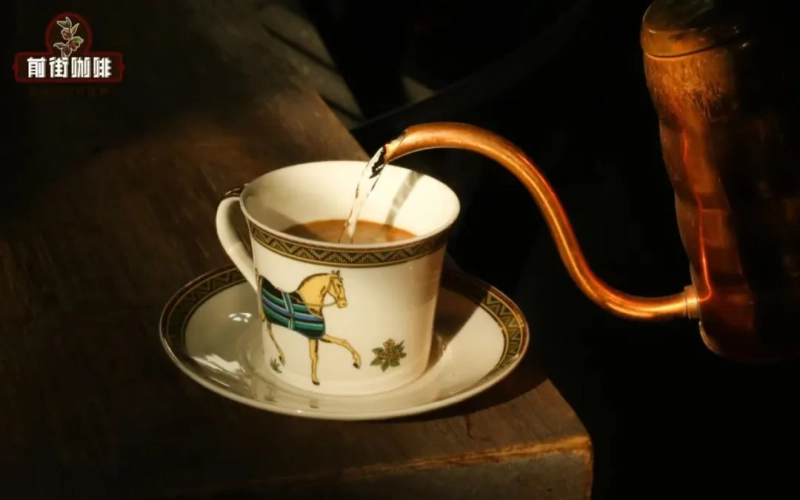
How
Hot Americano may seem like just espresso with hot water, but the water temperature directly affects the aroma, the balance of acidity and bitterness, and the drinking window. Front Street Coffee used the Warm Sun blend as the base and brewed Americanos at four water temperatures—55°C, 65°C, 75°C, and 90°C—then compared them through tastings at three points: immediately after brewing, at the 5-minute mark, and at the 20-minute mark. The experiment found that at the moment of serving, 65°C delivered the best overall performance, while over the course of 20 minutes, 75°C performed better overall. The article also recommends a serving temperature of 75±5°C for dine-in hot Americanos and offers practical tips such as preheating the coffee cup and distinguishing between dine-in and takeaway preparation. [more…]
Coffee Aroma Description Guide: An Analysis of 36 Common Aroma Names and Professional Tasting Terminology
When drinking coffee, have you ever encountered a familiar yet indescribable aroma? In fact, perceiving coffee flavors requires systematic cognitive training. In daily cupping and roasting adjustments, Front Street Coffee places particular emphasis on the ability to identify coffee flavors. This article starts with coffee's four major tastes—sour, sweet, bitter, and salty—and, combined with the classification logic of the flavor wheel, breaks down in detail 36 common aroma names across floral, fruity, green/vegetal/herbal, nutty/cocoa, sweet, spicy, sour/fermented, alcoholic fermentation, roasted, and other categories, along with specific representative coffee beans and Front Street's tasting suggestions, to help you more accurately describe and enjoy a cup of coffee's layers and lingering finish. [more…]
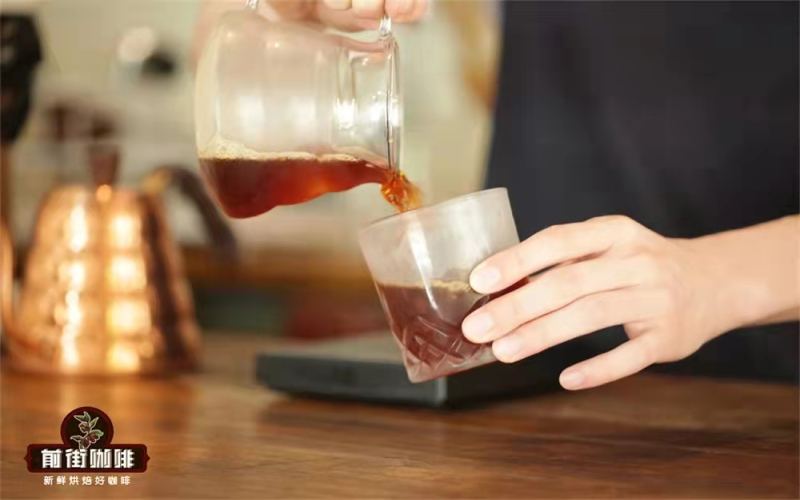
Americano, Long Black, Lungo, and Espresso: A Breakdown of the Methods, Ratios, and Flavor Differences of Four Italian-Style Black Coffees
They are all black coffee, yet Americano, Long Black, and Lungo are often lumped together; they all use Espresso as their base, but the order of adding water, the water-to-coffee ratio, and the extraction time all differ, ultimately producing distinctly different strengths and mouthfeels. This article will examine the differences between Americano, Long Black, Lungo, and Espresso from the angles of origin, preparation method, cup size, and flavor performance, and explain why Italian blend beans are often blends, as well as the different positioning of Front Street Coffee's four Italian-style coffee beans in terms of consistency, value for money, and flavor, helping coffee lovers choose according to their taste. [more…]
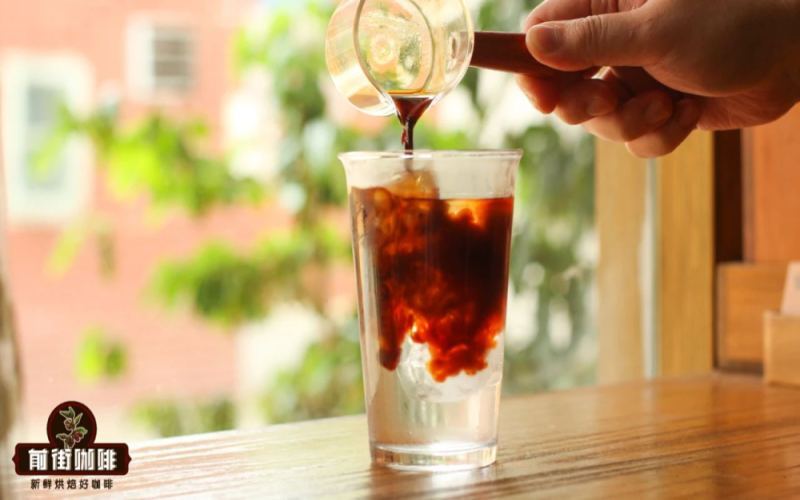
Iced Americano, Iced Pour-Over, Iced Drip, and Cold Brew: A Breakdown of Brewing Essentials and Flavor Differences Among Four Iced Coffees
The world of iced coffee is far richer than one might imagine, with iced Americano, iced pour-over, iced drip, and cold brew each having their own distinctive merits. The baristas at Front Street Coffee have combined their daily brewing experience to share the unique characteristics and specific preparation methods of these four types of iced coffee. From setting the coffee-to-water ratio and adjusting grind size to controlling extraction time and temperature, every step influences the final flavor in the cup. This article will break down one by one the two-stage pouring logic of iced pour-over, the espresso extraction parameters of iced Americano, the key points of low-temperature steeping for cold brew, and the dripping rhythm of iced drip coffee, helping coffee enthusiasts understand the principles while also appreciating the differences in texture and aroma among different iced coffees. [more…]
What Is the Ideal Water Temperature for a Hot Americano? A Comparative Experiment from 55°C to 90°C and the Perfect Ratio Recipe
The difference between a hot americano and an iced americano ultimately comes down to whether the espresso is combined with hot water or iced water. This seemingly simple combination actually involves a lot of nuance—water temperature, the coffee-to-water ratio, and the timing of tasting all influence the final flavor of an americano. This time, Front Street Coffee brewed hot americanos with four different water temperatures—55°C, 65°C, 75°C, and 90°C—and compared them at three points in time: just after brewing, 5 minutes later, and 20 minutes later. Using measured data, we’ll tell you which temperature is best for serving a hot americano for dine-in, and reveal the complete pattern of how coffee flavor changes over time at different water temperatures. [more…]
Latte, Cappuccino, Caramel Macchiato, and Mocha: A Full Analysis of the Flavor Differences Among Four Classic Milk Coffees
Walk into any coffee shop, and latte, cappuccino, caramel macchiato, and mocha are always familiar fixtures on the menu. They all appear to be combinations of espresso and milk, yet the experience after the first sip is vastly different. A cappuccino has a thick layer of milk foam with a pronounced coffee character, while a latte is rich in milky aroma with a smooth texture; the mocha has won many fans with its chocolate flavor, and the caramel macchiato is a sweet innovation brought to us by Starbucks. This article will break down, one by one, the ratio logic, flavor characteristics, and key tasting points of these four milk coffees, helping you no longer hesitate the next time you order, and also enabling you to judge more clearly whether a milk coffee has been made properly. Whether you are a beginner just getting into coffee or a seasoned enthusiast looking to refine your tasting skills, you will find practical reference here. [more…]
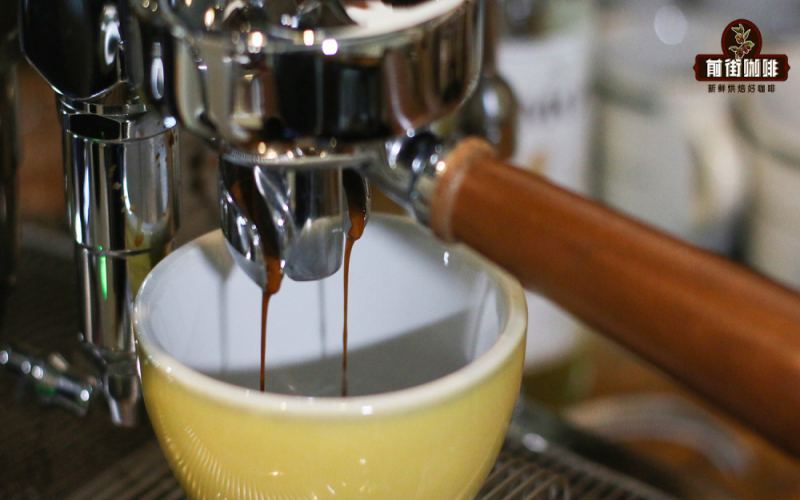
Espresso Tasting Guide: The Difference Between Single and Double Shots and How to Drink It Properly
Espresso is the foundation of the Italian coffee system, known for its high concentration and concentrated flavors. It serves both as the base for specialty coffee drinks and as a beverage suitable for drinking on its own. A standard single shot of espresso is about 30 milliliters, while a double shot is about 60 milliliters, and "shot" is commonly used as the unit when ordering. Front Street Coffee measured espresso concentration at about 9% to 11% using a refractometer, far higher than the roughly 1.3% of pour-over coffee, so the bitterness is pronounced, but the focus of tasting lies in the aroma, mouthfeel, and finish. This article will start with the difference between single and double shots, analyze the cleanliness, balance, crema layer, and sources of the finish of espresso, and share the correct four-step way to drink it, helping you better appreciate the charm of this rich cup of coffee. [more…]
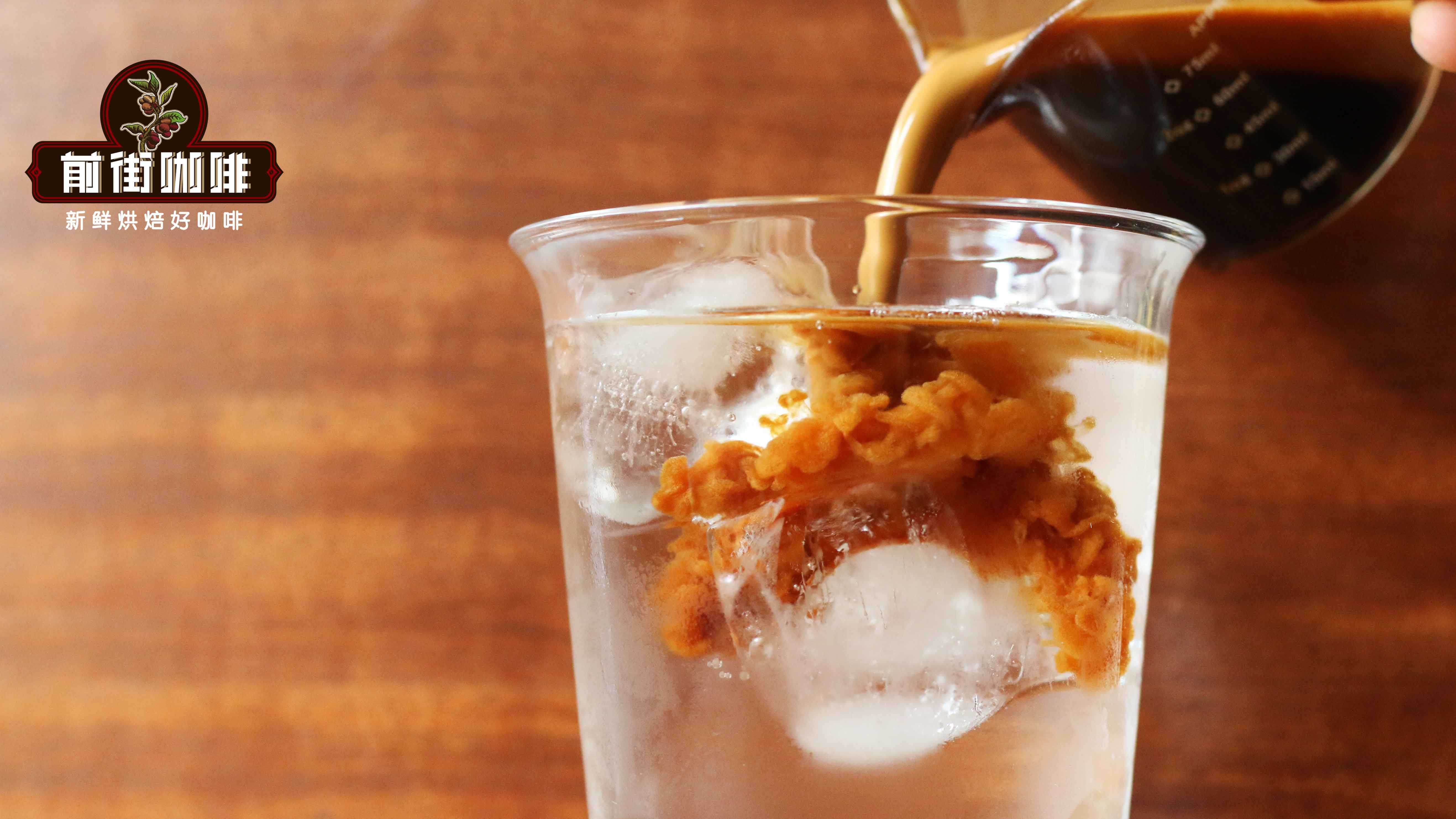
Iced Americano, Iced Pour-Over, Cold Brew, and Ice Drip: Extraction Differences and Flavor Comparison of Four Iced Coffees
In the hot summer, iced coffee becomes the top choice for many people. But can you accurately tell the difference between these four common types of iced coffee: iced Americano, iced pour-over, cold brew, and ice drip? Front Street Coffee systematically sorts out the characteristics of these four iced coffees from four dimensions: extraction method, preparation time, ease of operation, and flavor and mouthfeel. This article will explain in detail the specific preparation method for each type of iced coffee, including recommended parameters for coffee beans such as Front Street Classic Espresso Blend, Fruit Ding Ding, and Strawberry Candy, to help you choose the iced coffee preparation method that best suits your own conditions and taste preferences. [more…]
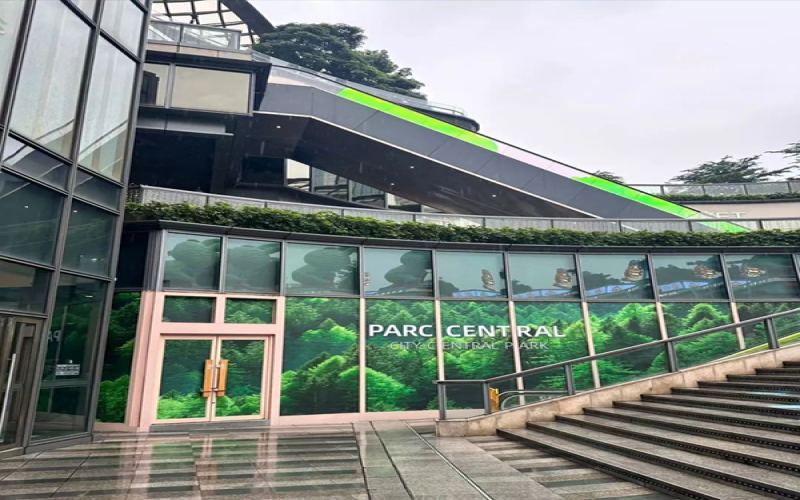
Nayuki's PRO store at Guangzhou Tianhuan Plaza suddenly withdrew from the site. Why did this CBD flagship store, which had been operating for over four years, close just like that?
The Naixue store in the sunken plaza of Guangzhou Tianhuan Plaza was quietly withdrawn without any prior announcement. The orange-pink signboard was removed, and advertising fabric was pasted on the floor-to-ceiling glass, leaving many regular customers astonished. This Naixue PRO store, which opened in May 2021, was the first PRO store on the central axis of Guangzhou's CBD. In addition to regular tea drinks, it also offered coffee, baked goods, and snack merchandise, and had long served as a showcase for the brand's co-branded theme stores. After operating for more than four years with stable customer flow and continuous events, it suddenly disappeared one day, sparking various consumer speculations about the reason for the closure and drawing renewed attention to Naixue's ongoing trend of store contraction in recent years. [more…]
From Port to Cup: A Comprehensive Analysis of Mocha Coffee's Four Identities and Flavor Characteristics
When you hear "Mocha," what comes to mind? Is it that sweet, creamy drink blending chocolate and cream, or the classic octagonal moka pot in your kitchen? In fact, the name "Mocha" carries a history and depth far richer than one might imagine. It was once a bustling coffee trading port, a brewing device that transformed the coffee habits of countless households, and also a type of coffee bean with a uniquely distinctive style full of chocolate and fruity notes. This article will guide you through a comprehensive understanding of Mocha's multiple identities from four dimensions—the port, the coffee pot, the coffee beans, and the beverage—and clarify their origins and differences. Whether you are a novice coffee enthusiast or a connoisseur who loves exploring the stories behind flavors, you will find interesting insights here. Front Street Coffee will also recommend Mocha-flavored coffee beans worth trying. [more…]
A Detailed Guide to Four Coffee Brewing Methods: Operational Essentials for Siphon, French Press, Pour-Over Drip, and Cold Brew Iced Coffee
To brew a cup of coffee with rich layers of flavor at home, choosing the right equipment and mastering the correct technique are equally crucial. This article systematically introduces four mainstream coffee brewing methods—the siphon (vacuum) coffee maker, the French press, the paper-filter pour-over dripper, and cold-water iced coffee—breaking down each one's equipment features, suitable grind size, coffee-to-water ratio, and detailed operating steps, along with practical tips. Whether you are a coffee enthusiast just starting out or an advanced player hoping to refine your technique, you will find a brewing method that suits you. The article also specifically recommends related products from Front Street Coffee to help you start your home coffee journey more easily. [more…]
A Detailed Guide to the Espresso Extraction Process: From the Differences Between Americano and Italian Espresso to Methods for Making Various Coffee Drinks
Espresso is the core foundation of the Italian beverage system, from which Americano, latte, cappuccino, flat white, mocha, and others are all derived. Drawing on the hands-on experience of Front Street Coffee, this article sorts out the extraction principles and standard parameters of espresso, compares the historical origins and taste differences between Americano and Italian-style coffee, and introduces the recipe concepts and flavor orientations of Front Street's four Italian-style blend beans. At the same time, the article also provides a complete list of the seven steps for making espresso, along with specific recommendations for dose, liquid weight, time, and more, helping coffee enthusiasts understand the logic behind bar operations so they can more consistently produce a qualified cup of espresso at home or in a shop. [more…]